
“You haven’t been trusted with the secret”: Jan Hřebejk on filmmaking
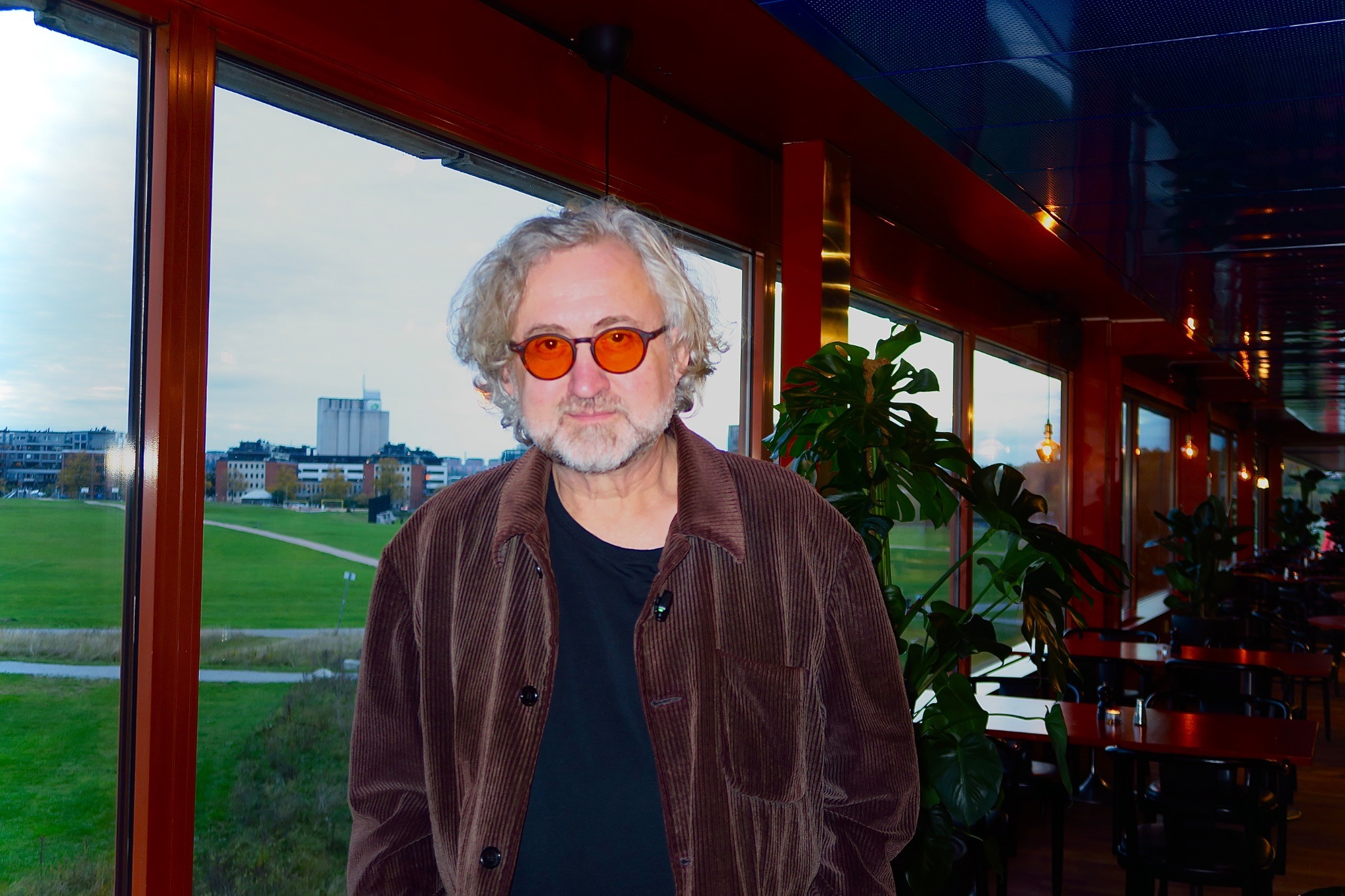
The Filmhuset restaurant is buzzing, not loudly, not quietly, but as the Swedish like to say lagom. There are murmurs about weekend plans, glasses clinking, cutlery being set down, it smells of late lunch and wine. Jan Hřebejk sits across from me, his back to Gärdet – a seat he chose. He ensures that my microphone is picking him up well, and sits back with a glass of white wine in hand and waits for me to start the interview.
“Fame in the arts is somewhat unquantifiable”, Hřebejk tells me when I ask about success and the imminent imposter syndrome that comes with it. He is after all one of the Czech Republic’s most prominent filmmakers. Having done Czech classics such as the Oscar nominated Divided We Fall (2000), The Teacher (2016), Kawasaki’s Rose (2009), and one of two films that Czech households return to every Christmas: Cosy Dens (1999). It is about Cosy Dens he talks about when he reflects on success. He questions it. Wherever he was worthy of it, and what it is that made him worthy in the first place. “Imposter syndrome is directly proportional to how famous a person becomes. (…) the people who have the most doubts are the ones who are truly the biggest stars”. And he does not see himself enough of a star to feel it. Is it humbleness or self awareness I wonder – maybe there is no difference.
Making films is not a family recipe that gets passed down in generations, a secret one filmmaker tells the other, it is figuring it out as you go. Hřebejk takes a long enough pause that I manage to start a new question; he then interrupts me to continue his train of thought. He does this often – a long pause collecting his thoughts.
- Creativity has rules, but it is different every time. Making a film is a new task each time you do it.
Hřebejk names Andrej Tarkovsky’s film Andrej Rublek (1966) as the best representation of imposter syndrome in film. According to him it captures the feeling of people expecting you to know how to do something, in his case make a film, to know the road to success, but in reality “You never know and nothing will save you. You haven’t been trusted with the secret”. But you do it anyway.
- There is a lot of cinema that does not require thought, that is only there to entertain.
A boy in a red jacket runs after his dog on the grass field, briefly bringing me back to the present moment. I realize we have taken up almost all of our time. “I will try to be more concrete from now on” Hřebejk promises, even though we both know that is a white lie. I chuckle and gesture for him to continue.
- Cinema assumes that people want to think.
He tells me how he and his children have different opinions on films, how right and wrong is sometimes a generational definition. A character can be written as an angel but still be perceived as the devil, because “an audience assesses films, and sides with characters in the context of their own life experiences or political preferences”. He describes the cinema as a constant battle between the creator and the audience – of what a filmmaker wants to say and what the audience wants to hear.
In fact, Hřebejk believes that, “in a fully free or democratic society politics does not interfere with absolutely everything. On the contrary, if a society is totalitarian or semi totalitarian, politics permeates and influences everything”. I asked about the inspiration behind one of my favorite scenes in Cosy Dens, namely a scene where the character Elien, who has parents living in the United States, projects western films on the back of houses for the neighboring kids. A scene I interpreted as subtle evidence that politics run through everything, something Hřebejk and I seem to disagree on. He then goes on to describe how that scene was inspired by real life events during the 1950s and 1960s Czechoslovakia, when the children of parents who worked abroad had to stay behind in boarding schools almost as hostages, a word used by the director, to guarantee their parents return and the children’s ideological mandate.
I ask where Hřebejk places his greatest hopes regarding the future of film. He hesitates to call it hope, but looks positively on the accessibility of making a film today and in the future.
- You can make films in a cheap and easy way because the means [you need to make a film] are available.
He mentions how there are a lot of films currently being made in the Czech Republic, however the problem is the distribution of them.
- It is easier to make a film, it is cheaper. It is harder to get it to an audience, to distribute it. More films are being made, less are being seen. A film is your personal statement.
If so, what films does a director that has created classics from personal statements enjoy? “A film you can talk about” – a film that lets its audience have different opinions, he tells me. Most recently Hřebejk saw Fjord (2026) and really enjoyed it, and wonders about Cristian Mungius own standpoint on the film’s theme, but does acknowledge that the filmmakers ambiguity is most certainly on purpose.
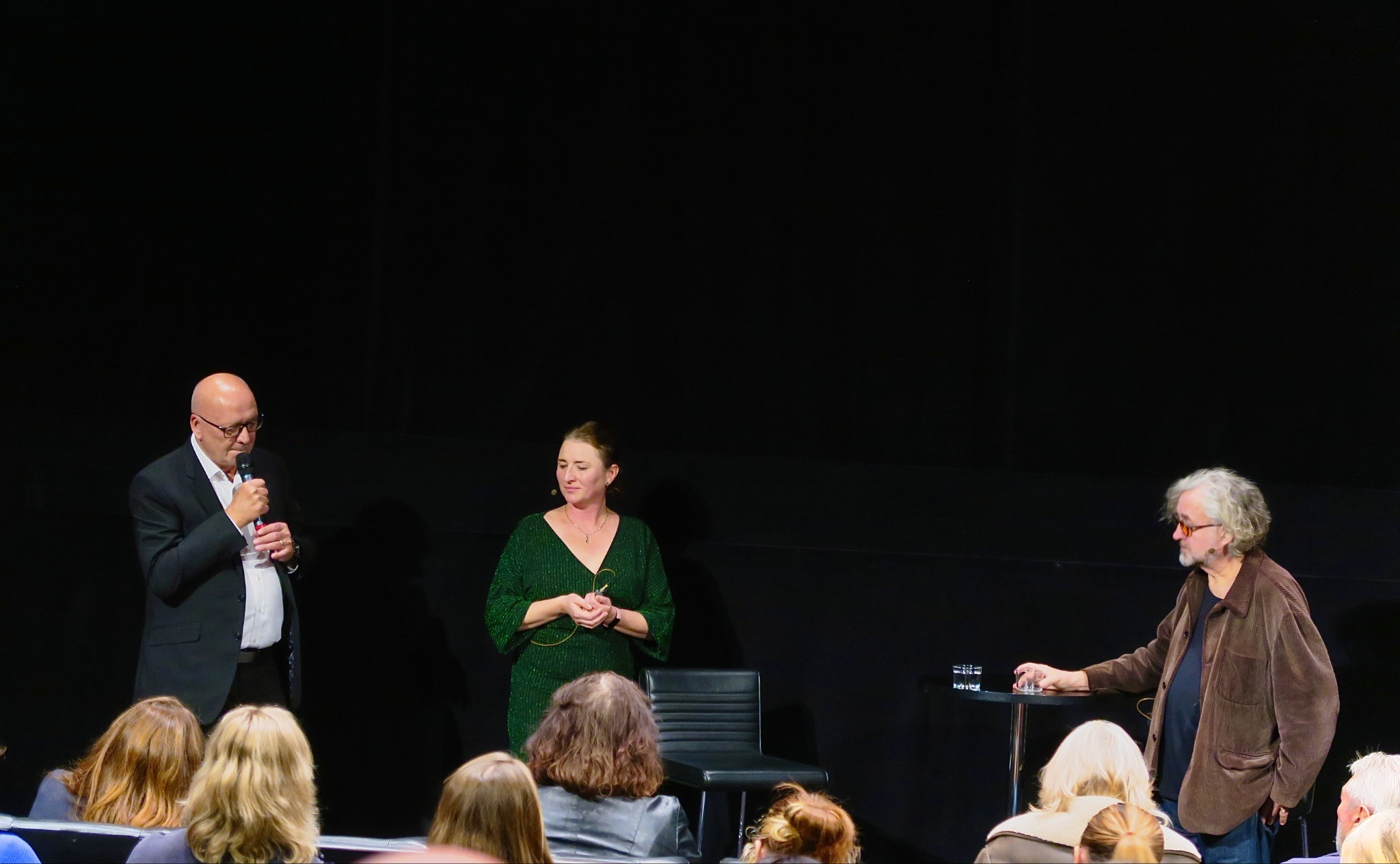
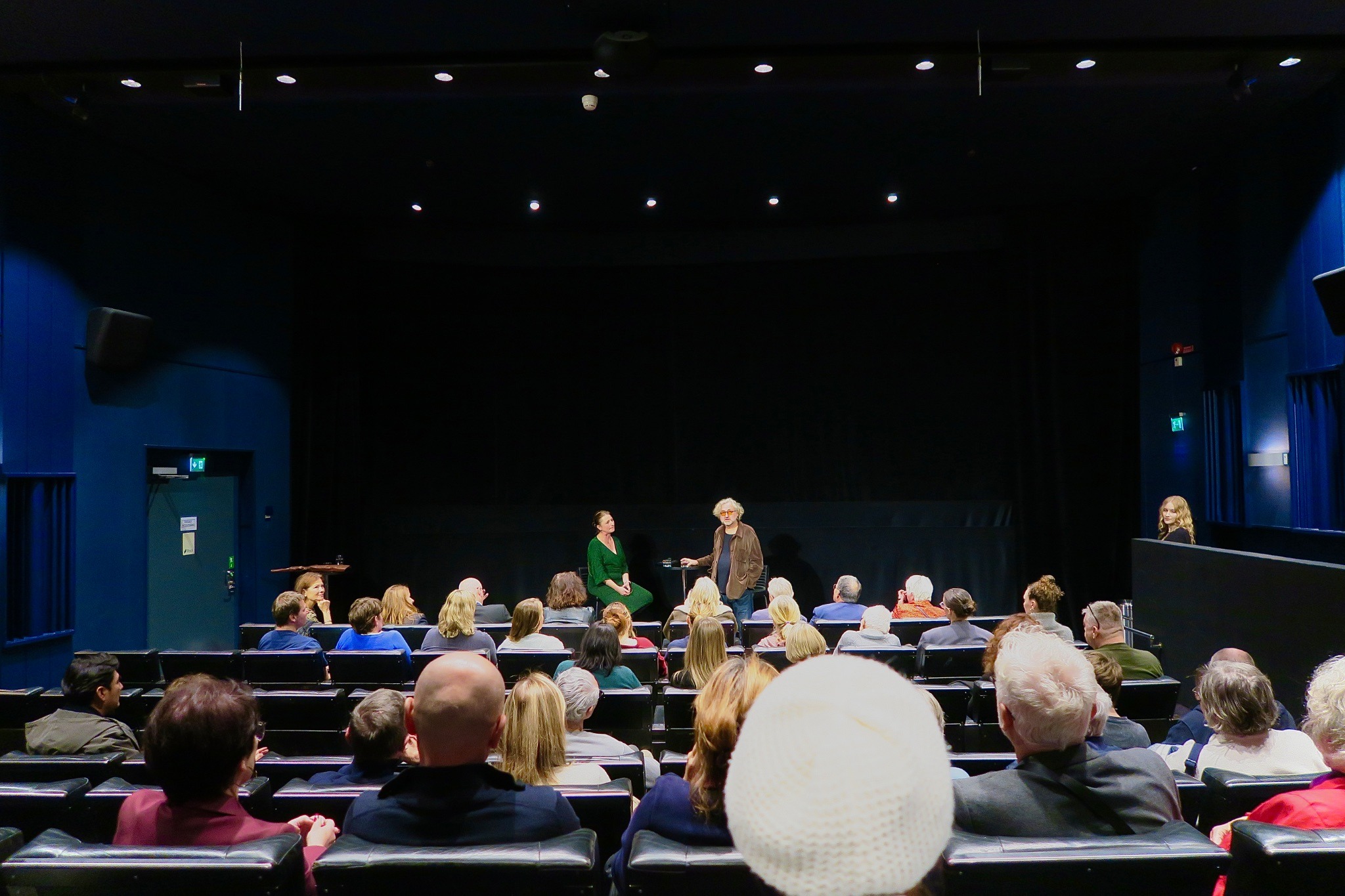
Jan Hřebejk talks as if he is directing, with an abundance of context and detail, and interludes of information that only make sense with the full picture. Which is why it does not surprise me when we get interrupted to round off our conversation. After all, the director is here on the request of the STSF Expatriate Association, in cooperation with the Embassy of the Czech Republic in Stockholm, for a special screening, and Q&A, of his film Kawasaki’s Rose.
I look down at the table, his glass of white wine sitting almost untouched, I flip through my notebook, filled with way too many questions for a 30 minute interview, to pick out one last question, as Hřebejk asks when he is expected to start. After receiving the time he glances down at his watch and positively adds:
Alright, we still have four minutes.
Once again I let out a light chuckle, and ask if he can recommend our readers films he enjoys, but also films of his that he thinks a Swedish audience would appreciate.
As expected, he gives me an abundance of recommendations.
He talks about film in a way I can only describe as I imagine him at 19 years old when he just started at the Film and TV School of the Academy of Performing Arts in Prague. Still full of excitement, only more experienced, but no closer to discovering the secret of filmmaking.
He names Richard Linklater as one of his favorite directors, with films such as Boyhood (2014), Nouvelle Vague (2025) and the Before Sunrise trilogy. As well as European classics such as Amarcord (1973) by Federico Fellini. He also mentions his excitement for Minotaur (2026) by Andrey Zvyagintsev. And finally, he recommends Divided We Fall, The Teacher, as well Kawasaki’s Rose as his introductory films.

Reporter
Tereza Holková
Ung Press


